

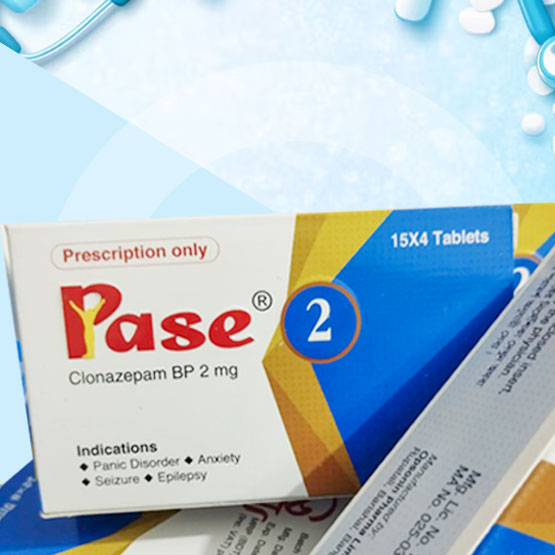
Clonazepam (Pase) 2 mg: Uses, Dosage & Safety Information
Description
Pase 2 mg (Clonazepam) is prescribed for panic attacks and specific seizure disorders. It is commonly used when other treatments are insufficient. Long-term therapy should be reassessed periodically due to limited long-term data.
How It Works
Clonazepam enhances GABA neurotransmission in the brain, calming overactive nerve cells. This reduces panic-driven anxiety and seizure frequency. Its effects appear quickly but are not intended for indefinite use.
Dosage
Treatment starts at the lowest effective dose. Doctors gradually increase doses to minimize side effects. Abrupt discontinuation can cause seizures or severe anxiety.
Side Effects
Common side effects include drowsiness and impaired coordination. Some users may experience memory or concentration difficulties. Dependence risk increases with higher doses or prolonged use.
Pregnancy & Breastfeeding
Clonazepam may affect fetal development if used during pregnancy. Infants exposed via breast milk may become overly sedated. Use requires careful risk–benefit assessment by a healthcare provider.
Storage Instructions
Store below 25°C in a dry place. Keep tablets in their original packaging and out of reach of children.
UK Regulation
Pase (Clonazepam) is a Prescription Only Medicine (POM) in the UK. It is controlled under UK drug misuse laws. Supply or possession without a valid prescription is a criminal offence.